
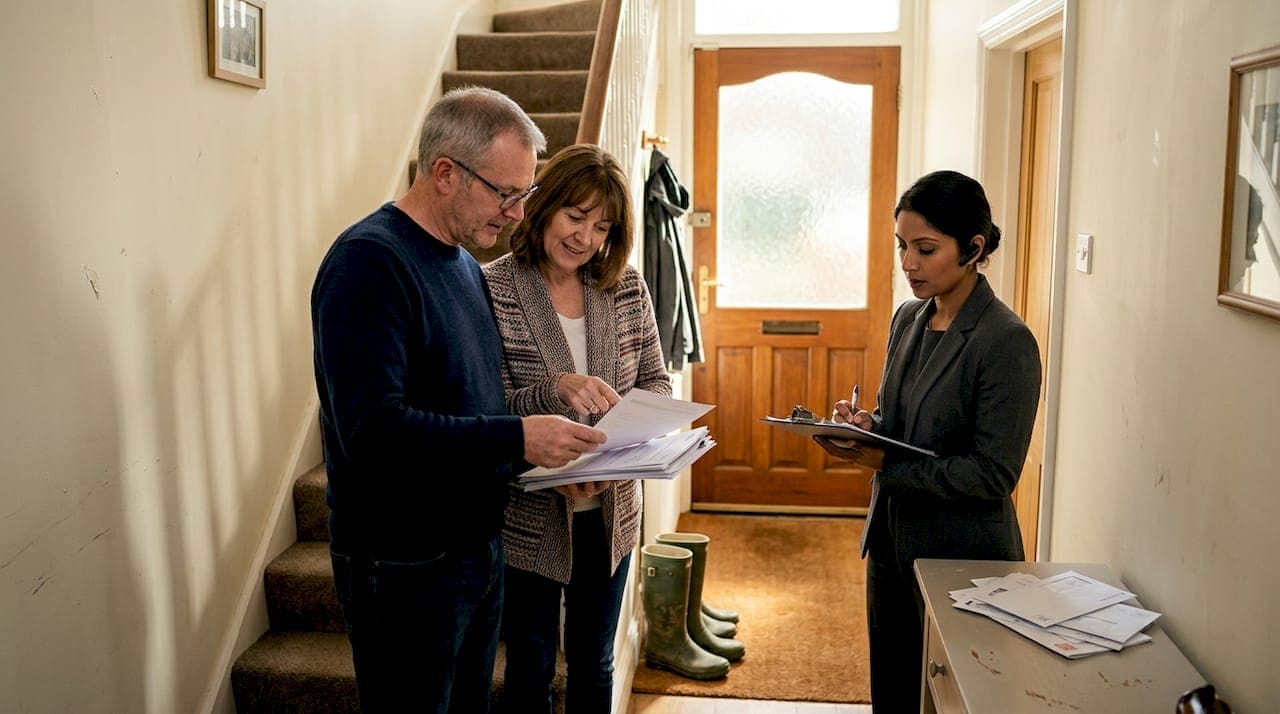
Nearly 30% of UK house sales fail before completion, which means a huge number of sellers go through months of stress only to end up back at square one. Most of those failures come down to the same avoidable mistakes: poor preparation, wrong pricing, and choosing the wrong agent. Selling your home is likely the biggest financial transaction of your life, and yet most people go into it without a clear picture of what to expect. This guide breaks down every stage of the UK home selling process, from your first decision to the day you hand over the keys, so you can move forward with confidence.
Table of Contents
- Overview of the UK home selling process
- Choosing your selling method and estate agent
- Preparing your home and paperwork
- Managing offers, surveys, and negotiations
- Conveyancing, exchange, and completion
- Expert insights and common pitfalls
- Make your home sale easier with StreetVal
- Frequently asked questions
Key Takeaways
| Point | Details |
|---|---|
| Step-by-step clarity | The UK home selling process includes 10–15 stages from decision to completion, averaging 5–6 months. |
| Agent choice impacts cost | Selecting between traditional, online, auction, or cash buyer methods changes service level, speed, and fees. |
| Preparation reduces risk | Early document gathering and smart home staging significantly cut delays and fall-through rates. |
| Negotiating matters | Prioritizing chain-free buyers and activating solicitors and agents promptly maximizes sale success. |
| Expert services save time | Platforms like StreetVal enable agent comparison, fee transparency, and a simplified selling experience. |
Overview of the UK home selling process
The UK home selling process typically involves 10 to 15 steps, and understanding the full journey before you start makes every stage easier to manage. Think of it like planning a road trip: knowing the route doesn't mean there won't be traffic, but it does mean you won't be caught off guard.
Here is the full sequence from start to finish:
- Decide to sell and set your goals
- Research the market and get valuations
- Choose your selling method and estate agent
- Prepare your home and gather documents
- List your property and launch marketing
- Receive and negotiate offers
- Accept an offer and instruct a solicitor
- Buyer arranges survey and mortgage valuation
- Conveyancing and legal searches begin
- Exchange of contracts (legally binding)
- Completion and key handover
- Mortgage repaid and funds transferred
For anyone going through this for the first time, the first-time sellers guide on StreetVal is a great companion resource. The full step-by-step selling guide also covers 2026-specific considerations worth reviewing.
| Stage | Typical timeframe |
|---|---|
| Time to first offer | 4 to 12 weeks |
| Conveyancing | 8 to 16 weeks |
| Exchange to completion | 1 to 4 weeks |
| Total process | 5 to 6 months |
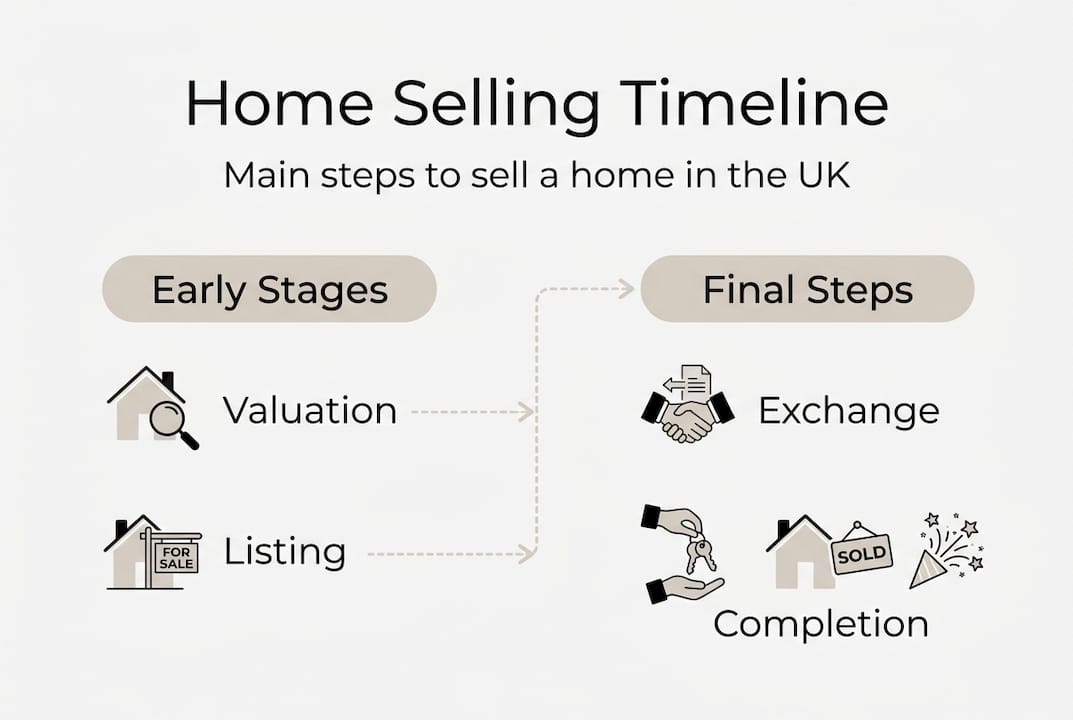
The biggest delays almost always happen during conveyancing and legal searches. Getting your documents ready before you list, and choosing an experienced solicitor early, can shave weeks off the process.
Choosing your selling method and estate agent
With the basic journey mapped, your next step is choosing how to sell, which can dramatically affect your experience and costs. There are multiple ways to sell a property in the UK, and each comes with real trade-offs.
| Method | Typical cost | Best for |
|---|---|---|
| High street agent | 1 to 3% plus VAT | Complex or unique properties |
| Online agent | £500 to £2,000 fixed | Standard homes in active markets |
| Hybrid agent | Varies | Sellers wanting a middle ground |
| Auction | 2 to 3% buyer premium | Fast sales, unusual properties |
| Cash buyer | Below market value | Speed over price |
High street agents offer hands-on service and local expertise. Online agents save money but require more input from you as the seller. If you are comfortable managing viewings and chasing progress yourself, an online agent can work well. If your property is unusual, in a slower market, or part of a complex chain, a traditional agent's experience is worth the extra cost.
- Always get at least three valuations before committing to an agent
- Negotiate the fee, especially if you have a desirable property
- Ask about marketing strategy, not just price
- Check reviews and recent local sales
- Understand what is included in the fee before signing
Pro Tip: Before signing any contract, read the estate agent fees explained guide so you know exactly what you are agreeing to. Tie-in periods and withdrawal fees catch many sellers off guard.
For a direct comparison of your options, the online vs high street estate agents breakdown on StreetVal is worth reading before you decide. You can also explore your options directly on the StreetVal homeowners page.
Preparing your home and paperwork
Once you have chosen your method and agent, it is time to get your property and paperwork ready for market. This stage is where many sellers lose weeks, and sometimes the sale itself.
The documents you need to have ready include:
- Energy Performance Certificate (EPC): Required by law before listing
- TA6 and TA10 forms: Property information and fittings/contents forms
- Mortgage details: Outstanding balance and lender contact
- Lease documents: If your property is leasehold
- Probate or title documents: If the property is inherited
Missing paperwork and property chains are among the top causes of sales falling through. Getting these documents together before you list removes one of the biggest friction points in the process.
On the physical side, small improvements deliver outsized results. Fresh paint in neutral colors, a tidy garden, and clean windows cost very little but significantly improve first impressions. Buyers form opinions within seconds of arriving, so curb appeal matters more than most sellers realize.
"Overpricing your home can double your time on market, while a well-staged, correctly priced property attracts stronger offers faster."
Pro Tip: Use the increase property value before selling guide to identify which improvements give you the best return before you spend a penny.

Managing offers, surveys, and negotiations
Once your home is on the market, managing offers and negotiations becomes your next priority. Most sellers receive their first offer within 4 to 12 weeks of listing, with the average sitting around five weeks.
When offers come in, do not just look at the number. Consider the buyer's position:
- Are they chain-free or a first-time buyer?
- Do they have a mortgage in principle?
- How quickly can they proceed?
- Have they sold their own property already?
Cash buyers have only a 4% fall-through rate compared to the overall average of nearly 30%. That difference is enormous. A slightly lower offer from a chain-free buyer is often worth more than a higher offer from someone with a complicated chain.
Surveys are another critical moment. If the buyer's surveyor flags issues, expect a renegotiation. This is called gazundering, where the buyer lowers their offer before exchange. It is legal in England and Wales, and it happens more often than sellers expect. The best defense is pricing accurately from the start and being transparent about any known issues.
Pro Tip: Instruct your solicitor as soon as you accept an offer, not after. Early instruction on property surveys when selling can reduce delays by several weeks and keeps the process moving.
Conveyancing, exchange, and completion
With offers agreed and surveys complete, the transaction moves into its legal and final stages. This is where patience and organization matter most.
Conveyancing covers all the legal work required to transfer ownership. Your solicitor will:
- Draft and review contracts
- Carry out local authority and environmental searches
- Raise and respond to enquiries from the buyer's solicitor
- Confirm the mortgage is being repaid correctly
- Coordinate exchange and completion dates
Conveyancing typically takes 8 to 16 weeks, and completion usually follows 1 to 4 weeks after exchange. Exchange is the moment the sale becomes legally binding. Both parties sign contracts, the buyer pays their deposit, and neither side can walk away without financial penalty.
Completion is the final day. Your mortgage is repaid from the sale proceeds, the remaining funds are transferred to you, and the buyer gets the keys. It is a good idea to have your moving arrangements confirmed well before this date.
For a deeper look at what to expect at each stage, the first-time sellers guide and the property selling blog on StreetVal cover the legal phase in practical detail.
Expert insights and common pitfalls
To wrap up, here is some expert-level advice and the most frequent mistakes sellers make, along with how to avoid them.
"Preparing paperwork early and instructing professionals before you need them can reduce your total selling timeline by 4 to 8 weeks."
The most common pitfalls include:
- Overpricing: Stalls interest and leads to price reductions that signal desperation
- Slow responses: Delays from sellers are a top reason buyers lose confidence and walk away
- Poor paperwork: Missing documents create legal delays that break chains
- Choosing the wrong agent: Low fees mean nothing if the agent lacks local knowledge or marketing reach
- Ignoring the buyer's position: Accepting the highest offer without checking the chain is a gamble
Chain-free buyers reduce fall-through rates to just 4%, compared to nearly 30% across all sales. That single factor, the buyer's chain status, has more impact on whether your sale completes than almost anything else.
Pro Tip: Consider a lock-out agreement once you accept an offer. It is not standard practice, but it gives you legal protection against gazumping and signals serious intent from the buyer. Ask your solicitor about the costs and conditions. Also review the estate agent fees explained page to make sure your agent's contract protects your interests too.
Make your home sale easier with StreetVal
Understanding the process is one thing. Having the right tools to act on that knowledge is another. StreetVal was built specifically for UK homeowners who want to take control of their sale from the very first step.

With StreetVal for homeowners, you can request valuations from multiple verified local estate agents and compare their fees, marketing approaches, and service levels side by side. There is no obligation and no pressure. You simply get the information you need to make a confident decision. See how it works and start to compare estate agent valuations in your area today. Whether you are ready to list or just exploring your options, StreetVal gives you a clear, unbiased starting point.
Frequently asked questions
How long does the home selling process take in the UK?
The process takes about 5 to 6 months on average, with time to offer typically ranging from 4 to 12 weeks and conveyancing lasting 8 to 16 weeks.
What documents do I need to sell my home?
You will need an EPC, TA6 and TA10 forms, and mortgage details. Missing these documents is one of the leading causes of sales falling through, so gather them before you list.
How much does it cost to sell a house using an estate agent?
Traditional agents typically charge 1 to 3% plus VAT, while online agents charge a fixed £500 to £2,000. Legal and other costs usually add another £1,200 to £2,200 on top.
What is gazumping and gazundering?
Gazumping is when a seller accepts a higher offer from a new buyer before exchange. Gazundering is when a buyer lowers their offer before exchange. Both are legal in England and Wales.
How can I minimize the risk of my sale falling through?
Prioritize chain-free or cash buyers, prepare your paperwork before listing, and instruct your solicitor early. Chain-free buyers fall through at just 4%, compared to nearly 30% for sales involving a chain.