
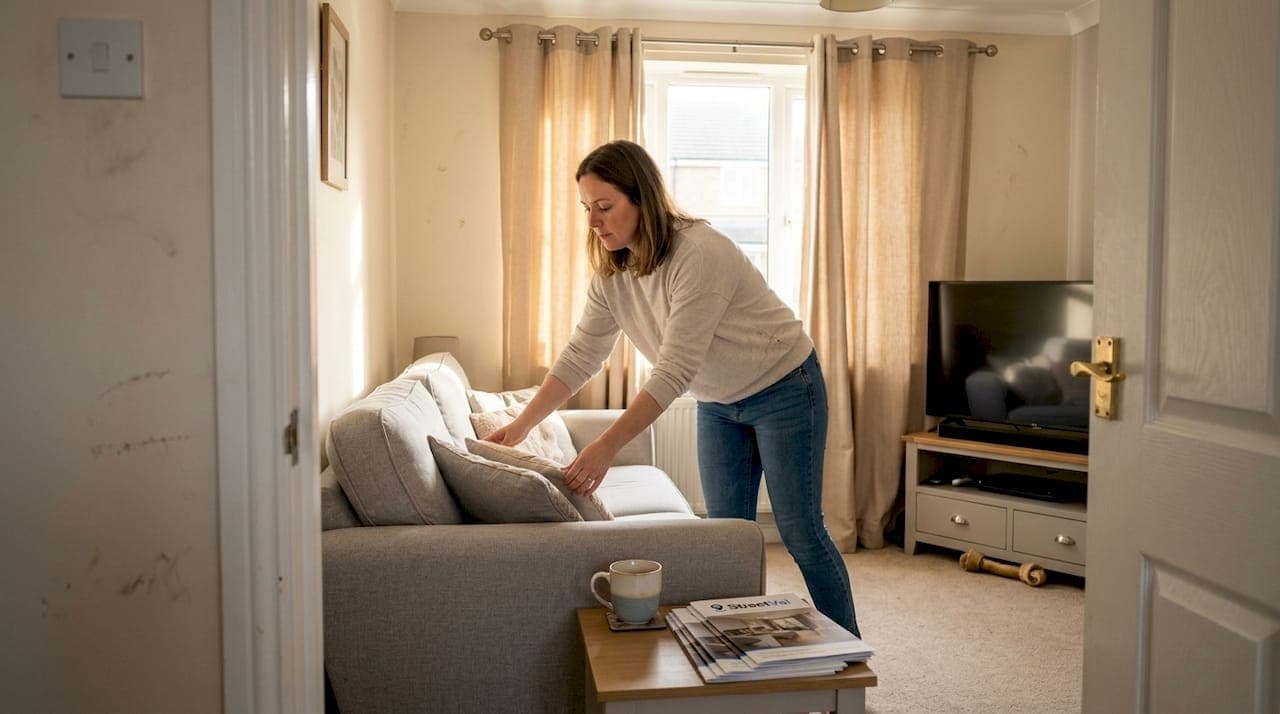
Pricing your home wrong is one of the most expensive mistakes you can make as a seller. Set it too high and buyers scroll past your listing without a second thought. Set it too low and you leave real money on the table. According to the UK House Price Index, the average UK house price in December 2025 was £270,000, yet thousands of sellers still rely on guesswork or neighbor gossip instead of real data. This article walks you through exactly how to prepare, price, and sell your home efficiently so you attract serious buyers and achieve the best possible outcome.
Table of Contents
- Understand your local market
- Prepare your home to attract buyers
- Set the right price from day one
- Choose the best estate agent for your needs
- Spot and respond to overpricing early
- Get accurate valuations before you commit to anything
- Frequently asked questions
Key Takeaways
| Point | Details |
|---|---|
| Benchmark with real data | Use official sold prices for your area, not just asking prices, to set realistic expectations. |
| First impressions matter | Simple home improvements and professional photos can make your property stand out to buyers. |
| Price competitively | Avoid overpricing to prevent your home from stagnating on the market and needing reductions later. |
| Compare agent offers | Request and review multiple estate agent valuations to find the best representation. |
| Stay flexible | Monitor interest and feedback closely so you can adjust your approach and price quickly if needed. |
Understand your local market
Before you call a single estate agent, you need a clear picture of what buyers are actually paying in your area. Not what sellers are asking. What buyers are paying. That distinction matters more than most people realize.
The best place to start is the UK House Price Index, which tracks official sold prices across every region in England, Wales, Scotland, and Northern Ireland. With the average UK price sitting at £270,000 as of December 2025, regional variation is enormous. A three-bedroom semi in Manchester sells for a very different figure than the same property in Surrey.
Here is what to focus on when researching your local market:
- Sold prices, not asking prices. Rightmove and Zoopla show listings, but the Land Registry shows what deals actually closed at.
- Recent sales only. Stick to transactions from the past three to six months. Older data reflects a different market.
- Like-for-like comparisons. Match your property by type, size, condition, and street, not just postcode.
- Price trend direction. Are local prices rising, flat, or softening? Timing your sale to an upswing can add thousands.
"The biggest mistake sellers make is pricing based on what they hope to get rather than what the evidence supports."
For a deeper breakdown of how to interpret this data, our property valuation guide walks you through the process step by step. You can also track broader shifts with our overview of UK property market trends heading into 2026.
Pro Tip: Search the Land Registry price paid data for your specific street, not just your postcode. Street-level data is far more accurate for benchmarking than area-wide averages.
Prepare your home to attract buyers
With a solid grasp of your local market, your next step is making your property as attractive as possible. Buyers form an opinion within seconds of seeing a photo online or pulling up outside your home. First impressions are not just important. They are almost everything.
The good news is that you do not need a full renovation to make a strong impression. Targeted, low-cost improvements consistently deliver the best return. Our guide on how to increase your property's value shows that improvements tailored to buyer preferences lead to faster sales and stronger offers.
Here is where to focus your energy:
- Declutter every room. Buyers need to visualize their own life in the space. Your belongings make that harder.
- Deep clean throughout. Clean homes feel cared for. Dirty ones raise red flags about maintenance.
- Fix minor issues. Dripping taps, cracked tiles, and scuffed walls are cheap to fix but expensive in buyer perception.
- Boost curb appeal. Mow the lawn, paint the front door, and clear the driveway. The exterior is the first thing buyers see.
- Neutralize the decor. Bold colors and personal artwork can alienate buyers. Neutral tones help people picture themselves living there.
- Invest in professional photography. Most buyers start their search online. High-quality photos generate significantly more viewing requests.
If this is your first time selling, our guide for first-time sellers covers the full process from preparation through to completion.
Pro Tip: Schedule your photography on a bright day and open all curtains and blinds. Natural light makes rooms look larger and more inviting, which directly increases click-through rates on property portals.
Set the right price from day one
Once your property looks the part, it is critical to set a price that generates serious interest. Overpricing is not just a minor miscalculation. It actively damages your sale. Buyers and their agents are well-informed, and an inflated price signals either ignorance or desperation.
Here is a practical framework for arriving at the right number:
- Pull sold price data from the Land Registry for comparable properties sold in the last six months.
- Request valuations from at least three local agents. Note where they agree and where they diverge.
- Cross-reference with the HPI to understand whether your local market is above or below the national trend.
- Factor in your property's condition. A well-presented home can command a modest premium. One needing work should be priced accordingly.
- Set a realistic ceiling. Price at the top of what the evidence supports, not above it.
- Build in room to negotiate. Most buyers expect to negotiate. A small buffer is fine. A large one backfires.
According to The Telegraph, signs of overpricing include fewer viewings and a longer time sitting on the market. Both are costly. A stale listing loses credibility fast, and buyers assume something is wrong with the property even when the only problem is the price.
Stat to know: Homes that reduce their price after a slow start typically sell for less than they would have achieved with correct pricing from day one.
For a clear method to arrive at an accurate home valuation, use multiple data sources rather than relying on any single opinion.
Choose the best estate agent for your needs
Pricing is vital, but your choice of agent can make or break your sale. The right agent brings local knowledge, a strong buyer database, and negotiation skills that can add thousands to your final price. The wrong one costs you time, money, and stress.
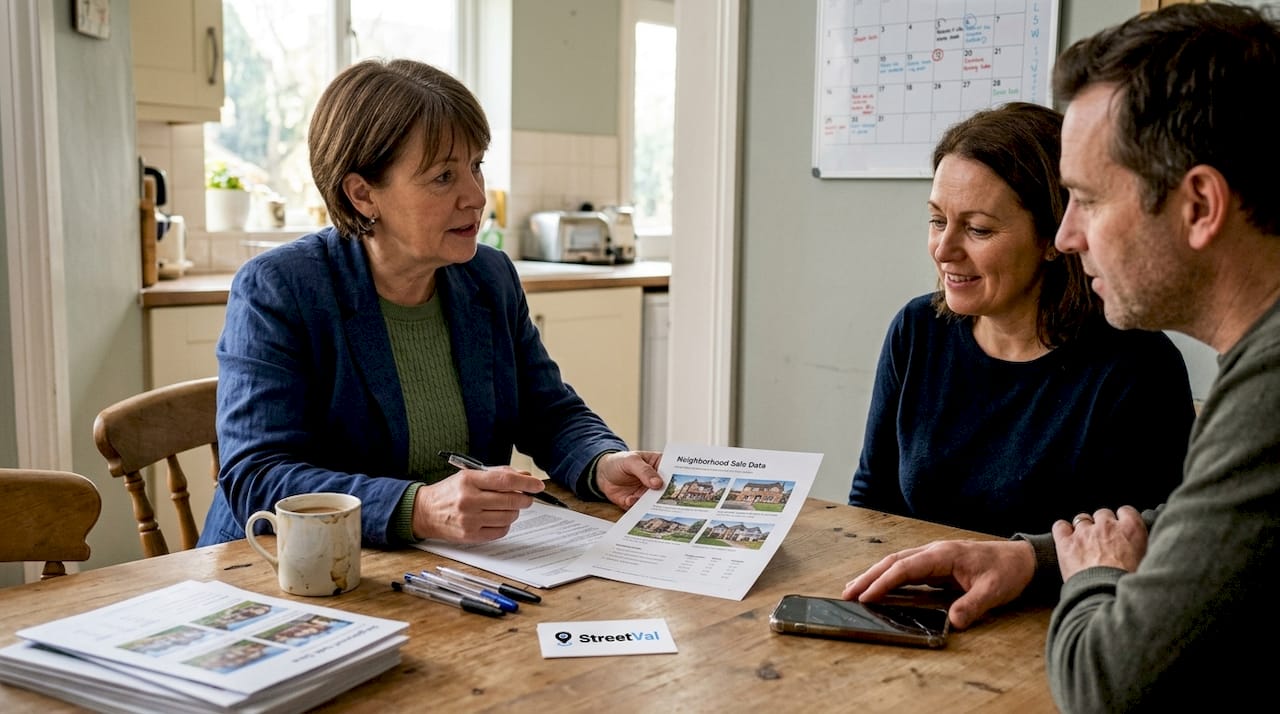
When comparing agents, look beyond the valuation figure they give you. Some agents deliberately overvalue to win your instruction, then push for a price reduction weeks later. Comparing valuations from multiple agents against real market data is the most reliable way to spot this tactic.
| Factor | What to look for |
|---|---|
| Track record | Recent sales of similar properties in your area |
| Local knowledge | Familiarity with your street, school catchments, and buyer demand |
| Marketing approach | Professional photos, portal presence, social media strategy |
| Communication style | Regular updates, honest feedback, accessible contact |
| Fees | Percentage vs. fixed fee, sole vs. multi-agency terms |
| Negotiation skills | Ask how they handle offers and manage buyer chains |
Key questions to ask every agent before signing:
- How many properties like mine have you sold in the last six months?
- What is your average sale price versus asking price ratio?
- How will you market my property beyond Rightmove?
- What happens if I am unhappy with your service?
Our estate agent selection tips go deeper on what separates good agents from great ones. Before you commit, also review our estate agent fees guide so you understand exactly what you are agreeing to pay.
Spot and respond to overpricing early
Even with the right prep and pricing, sellers must stay alert for warning signs of overpricing. The market gives you feedback quickly. The key is reading it correctly and acting fast.
| Warning sign | What it likely means | Suggested action |
|---|---|---|
| Fewer than 3 viewings in 2 weeks | Price is deterring interest | Review comparable sold prices |
| Viewings but no offers | Buyers see value elsewhere | Seek honest agent feedback |
| Offer significantly below asking | Buyers perceive overpricing | Consider a measured reduction |
| Property on market over 8 weeks | Listing has gone stale | Reassess price and presentation |
According to The Telegraph, few or no viewings combined with a long time on the market are the clearest signals that your price is too high. Adjusting based on real buyer feedback is not a sign of weakness. It is smart selling.
"A price reduction made early and decisively is far less damaging than a series of small drops that signal panic to the market."
When you do reduce, make it meaningful. A drop of 1% on a £300,000 property is £3,000. Buyers will barely notice. A 3 to 5% reduction signals genuine intent and tends to reignite interest. Use platforms like StreetVal to compare your current price against what agents and recent sales data actually support.
Pro Tip: Ask your agent for a written breakdown of viewing numbers and feedback after the first two weeks. If they cannot provide this, that is itself a warning sign about their communication standards.
Get accurate valuations before you commit to anything
If there is one step that ties everything in this article together, it is getting multiple valuations before you make any decisions. A single agent's opinion is just that: one opinion. It may be accurate, or it may be inflated to win your business, or it may be conservative to ensure a quick sale.
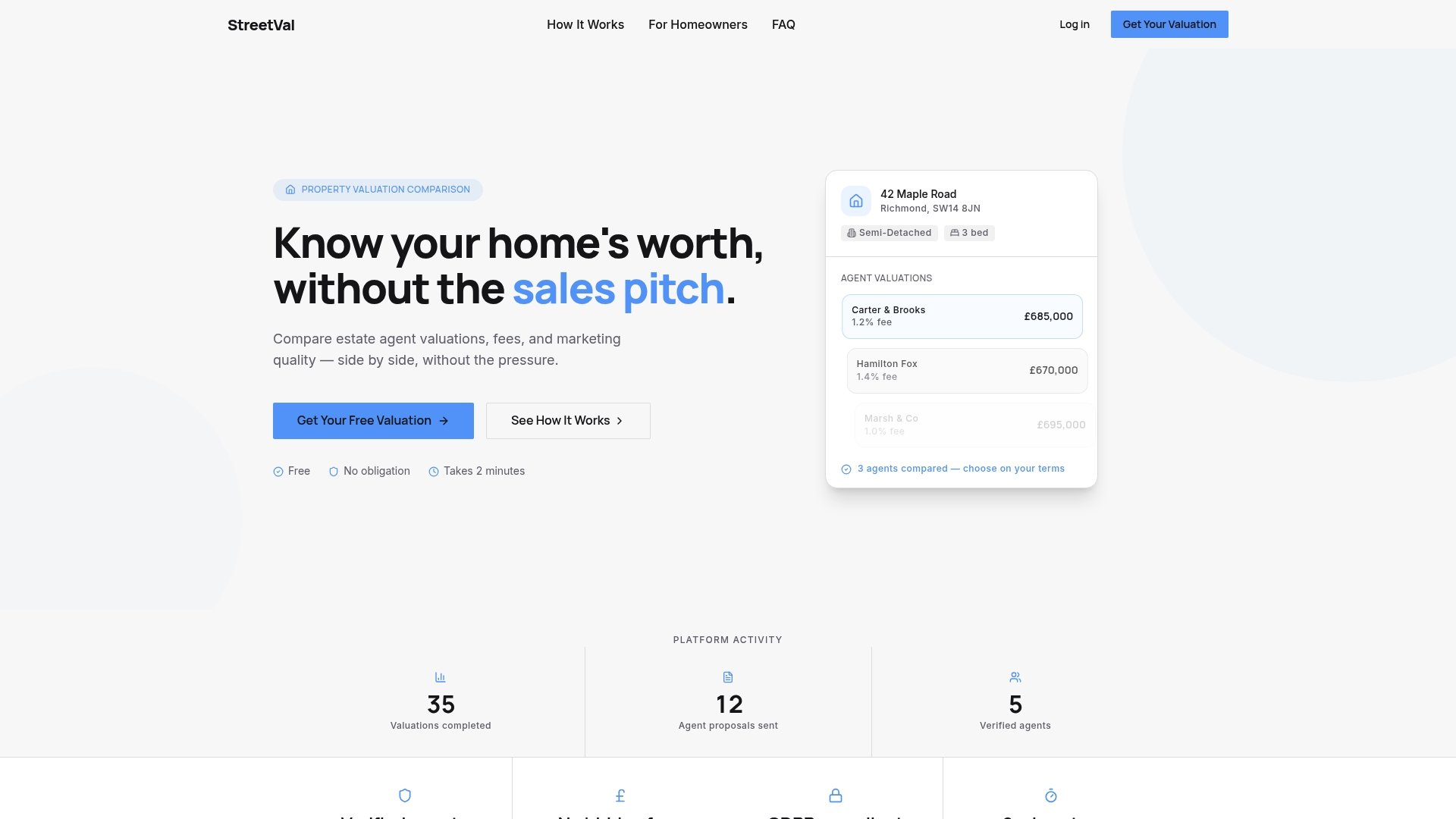
StreetVal.co.uk was built specifically to solve this problem for UK homeowners. Instead of calling agents one by one and sitting through separate appointments, you can request valuations from multiple verified local agents in one place and compare them side by side. You see the numbers, the fees, and the service approach all at once, with no obligation to proceed with any of them. It is the fastest way to build a clear, evidence-based picture of what your home is genuinely worth in today's market. Whether you are ready to list now or just starting to explore your options, getting a free comparison through StreetVal takes minutes and gives you the confidence to make informed decisions.
Frequently asked questions
How do I find out what my house is worth?
Use the UK House Price Index for official regional sold prices, then combine that data with valuations from at least two or three local estate agents for the most accurate picture.
What's the best way to choose an estate agent?
Compare recent sales results, fees, and online reviews, and always request multiple valuations before committing. An agent who values your home closest to what the data supports is usually more trustworthy than one who flatters you with a high number.
What are common signs my home is overpriced?
Few or no viewings in the first two weeks and a long time on the market are the clearest signs of overpricing. If buyers are viewing but not offering, your price may be slightly above market rather than wildly off.
Should I renovate before selling my house?
Small repairs, fresh neutral paint, and a thorough clean almost always help. Large structural renovations rarely return their full cost in the sale price, so focus on presentation over transformation.
How quickly should I adjust my price if I get no offers?
If two to three weeks pass without serious interest, seek written feedback from your agent and adjust your price promptly. A decisive reduction early in the process is far more effective than waiting and hoping the market catches up.